| Charity No: 1197240
As sustainability reporting becomes more important, businesses need to know more than simply whether their old IT was recycled. This blog explores how the UK's new Sustainability Reporting Standards are increasing expectations around transparency, evidence and environmental impact. It explains why secure IT Asset Disposal (ITAD) should prioritise reuse wherever possible, helping organisations protect sensitive data, reduce electronic waste and create measurable social value by giving suitable devices a second life through projects like Every Child Online.

Most businesses can tell you how much electricity they used last year.
They can usually tell you how many miles their fleet travelled, how much paper they recycled and, if they've invested properly, how much carbon they've saved by switching to LED lighting.
Ask what happened to the 2,000 laptops they replaced three years ago and the conversation often goes quiet.
A pallet of equipment disappears into a warehouse. A recycling certificate arrives a few weeks later. The job is ticked off and everyone moves on. For years, that was considered good practice.
It isn't any more.
The publication of the UK's new Sustainability Reporting Standards, UK SRS S1 and UK SRS S2, marks another step towards organisations having to properly understand what is happening across their entire value chain. Sustainability reporting is becoming less about good intentions and more about evidence. If you're responsible for ESG, procurement, finance or IT, your redundant technology has just become far more interesting.
That shouldn't be a surprise.
Every laptop sitting on an employee's desk represents hundreds of kilograms of embedded carbon before it has even been switched on. Metals have been mined, components manufactured across multiple continents, assembled, shipped, packaged and delivered. By the time someone opens the box, most of that device's lifetime carbon footprint has already been created.
Then, three or four years later, many organisations replace perfectly usable equipment simply because the refresh cycle says it's time. There's nothing wrong with refreshing equipment. Businesses need reliable, secure technology. The question is what happens next. That is where the sustainability story really begins.
Recycling isn't always the best outcome
This is probably the most misunderstood part of the whole conversation. People hear the word "recycling" and instinctively think it's the green option.
Sometimes it is. Sometimes it isn't.
If a laptop is beyond economic repair, recycling is absolutely the right answer. Valuable materials are recovered and hazardous waste is managed correctly. But if that same laptop could have been refurbished and safely used for another three or four years, shredding it is difficult to justify environmentally.
Manufacturing a replacement device comes with an enormous carbon cost. Keeping an existing device working almost always has the smaller environmental footprint.
It's the same principle as extending the life of a building rather than demolishing it to construct another one. We accept that logic in construction. We should apply exactly the same thinking to technology.
Compliance gets you to the starting line
· Most organisations are already aware of WEEE Regulations.
· They understand the importance of GDPR.
· They know certified data destruction matters.
· That's all essential, but it only answers part of the question.
Increasingly, businesses need to demonstrate far more than simply disposing of equipment legally.
They need to understand:
· How many devices were securely erased?
· How many were refurbished?
· How many found a second life?
· How many genuinely reached end of life?
· How much electronic waste was avoided?
· How much embodied carbon remained in use instead of being replaced by newly manufactured equipment?
Those aren't hypothetical questions anymore. They're becoming the sort of information investors, customers and auditors expect organisations to know.
The data gap is bigger than most people realise
One of the biggest problems isn't poor practice. It's poor information. We've spoken with organisations managing tens of thousands of devices that genuinely cannot tell you what happened to equipment after it left their premises.
They have a certificate.
Sometimes they have a weight.
Occasionally they know how many pallets were collected.
But ask how many laptops were refurbished, how many schools benefited, how many tonnes of CO₂e were avoided or how much social value was created, and nobody has the answer.
That isn't because they don't care. It's because the process was never designed to capture those outcomes. UK SRS changes the emphasis.
If sustainability data is expected to stand up to independent assurance, vague statements such as "we recycle responsibly" simply won't carry much weight.
Evidence will.
Technology can solve more than one problem
This is where the conversation becomes much more interesting. Every week we see equipment that businesses have written off as obsolete. Some of it genuinely is. Much of it isn't.
A laptop that no longer meets the specification for a global financial institution may still transform the life of a teenager who has been trying to complete GCSE coursework on a mobile phone. A desktop that has fallen outside a corporate refresh policy may still have years of reliable service left..
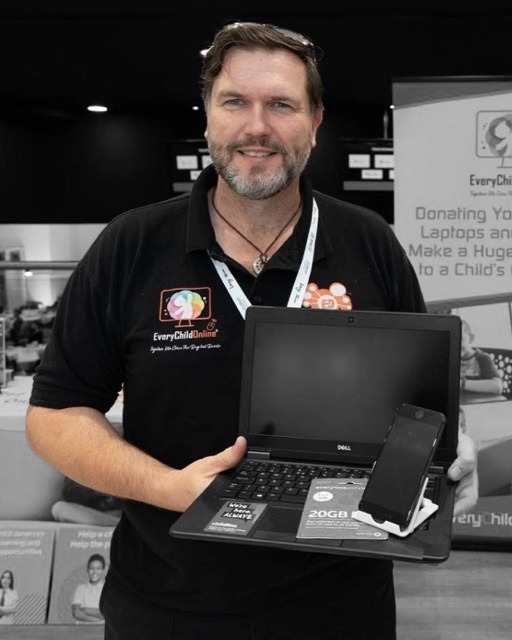
Through Everyone Digital CIC, organisations can securely dispose of redundant IT equipment using certified data erasure and compliant IT Asset Disposal processes.
Where devices are suitable for reuse, they don't simply disappear into a recycling stream. They are professionally refurbished before being passed to Every Child Online and other digital inclusion projects where they become part of something much bigger than an asset register.
We've watched children receive their first computer and immediately start exploring educational software that simply wasn't accessible before. We've met parents completing job applications after months of relying on a cracked mobile phone.
We've helped young people begin college with the same opportunities as everyone else because they finally had a device at home. Those moments don't appear on a recycling certificate. But they are very real. They are also a measurable social outcome.
ESG isn't just about carbon
Environmental reporting is only one part of ESG. The "S" matters just as much. Businesses increasingly want their supply chains to create genuine social value alongside environmental improvements. Responsible IT Asset Disposal has become one of the few areas where organisations can achieve both at the same time.
One decision can reduce electronic waste, preserve embodied carbon, support the circular economy, protect sensitive data and help tackle digital poverty.
That's a rare combination.
The organisations that prepare now will be ahead
The UK Sustainability Reporting Standards are another sign of the direction of travel. Reporting expectations are increasing. Evidence requirements are increasing. Assurance requirements are increasing. None of that should be viewed as another compliance burden. Done properly, it becomes an opportunity to understand the real impact of your technology estate.
The organisations that start collecting meaningful data today will be in a far stronger position than those trying to recreate years of missing information later.
At Everyone Digital CIC, we help organisations manage redundant IT securely, responsibly and transparently. Our accredited IT Asset Disposal services support WEEE compliance, GDPR and robust governance, while providing the evidence businesses increasingly need for ESG and sustainability reporting.
Through Every Child Online, the technology that still has life left in it can continue making a difference. Devices are refurbished, redistributed and placed into the hands of children, families, charities and community groups who need them most.
That's good for the environment.
It's good for society.
And increasingly, it's good business.
Mike Tarbard, CEO of Everyone Digital CIC and Every Child Online
Looking for help with a device? Please note that Every Child Online does not provide devices directly to members of the public. *
We’d love to hear from you! Whether you’re interested in partnering with us, making a donation, or simply want to learn more about our work, please get in touch using the form.
*Every Child Online operates within the UK only. We provide support through trusted referral partners, including schools, charities, social services and community organisations. We do not supply devices directly to members of the public or outside the UK.