| Charity No: 1197240
The digital divide continues to affect millions of people across the UK, with access to suitable devices remaining a major barrier. We look at what digital exclusion means in 2026, how it affects children and education, and how giving unwanted business technology a second life can help.
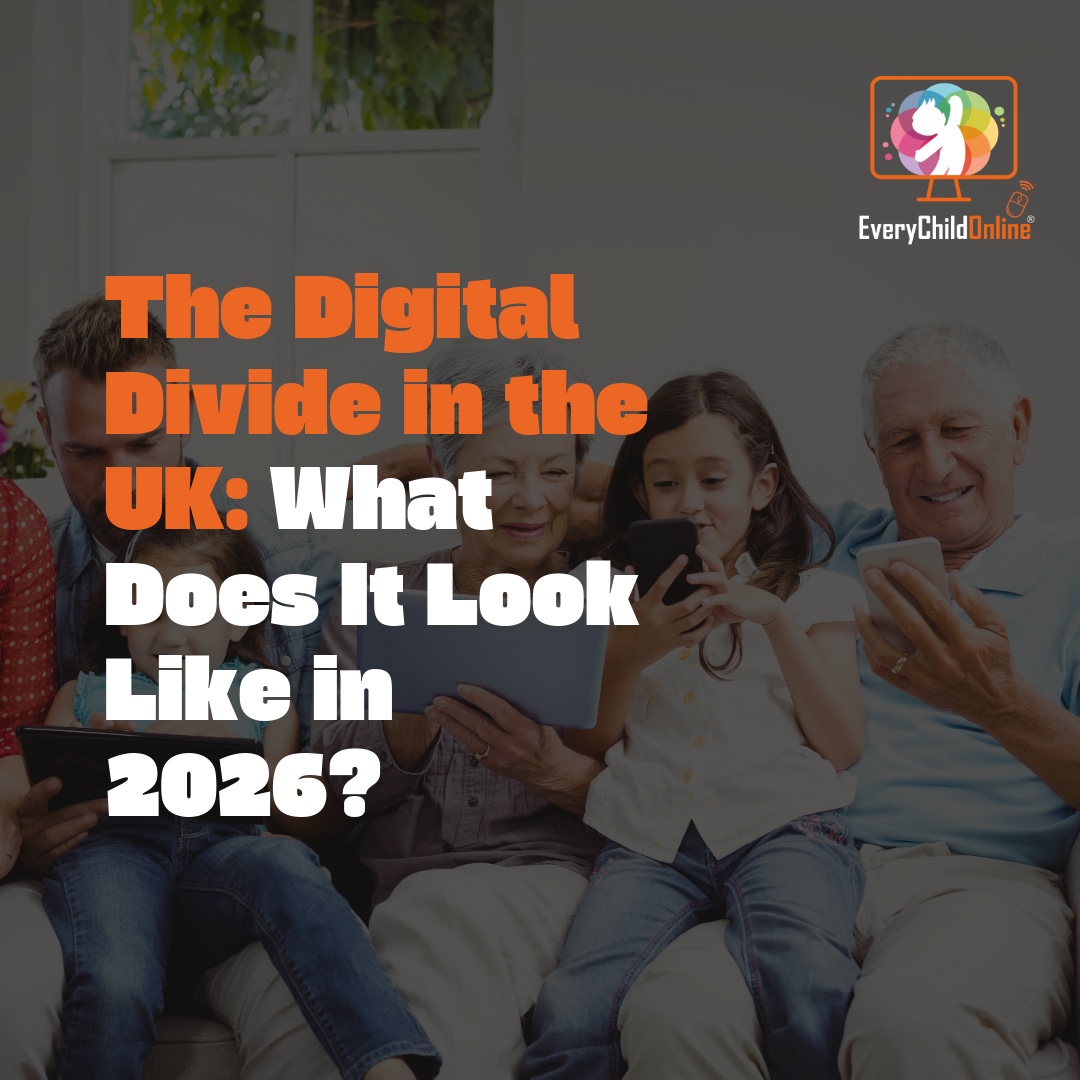
The digital divide is the gap between people who have reliable access to modern digital technology, like computers and high-speed internet, and those who do not. The key causes of the digital divide in the UK and across the world include income, as low-income families often cannot afford suitable devices or fast internet; geography, as rural or remote areas can lack the infrastructure for fast broadband; age and education, as older adults or people with lower digital literacy may struggle to use modern tools confidently and safely.
Not having access to the technology needed for everyday life can have a lasting impact. Students without reliable internet or suitable devices may fall behind with online learning or struggle to research and complete homework. Jobseekers may miss opportunities to apply for certain roles or work remotely. People may also face barriers when trying to book GP appointments, access online banking or complete other essential tasks.
The digital divide is still affecting millions of people across the UK. The government’s 2026 Digital Inclusion Action Plan reports that 1.6 million people have no internet connection at all, while around 1.7 million UK households do not have access to a laptop, tablet or desktop. It also recognises that many more people may technically be online, but still do not have the right device or the digital skills needed to fully take part in everyday life.
For children and young people, the issue is often less about being completely offline and more about whether they have access to a suitable device for schoolwork and everyday learning.
These figures show that digital exclusion is not just about whether someone has an internet connection. Having access to a suitable device is still a major part of the problem, particularly as more education, work and essential services continue to move online.
Having internet access does not necessarily mean having the right technology to use it properly. Ofcom found that 30% of parents of school-aged children said their child did not always have continuous access to an appropriate device for online schoolwork at home. Among those affected, 61% said their child had to share devices with other household members, while others relied on less appropriate or borrowed devices.
For children especially, reliable access to a suitable laptop or computer can make a huge difference. A phone might be enough to send a message or search for something quickly, but completing homework, writing documents or using school learning platforms can be much more difficult without the right device.
Technology is now a normal part of education, both inside and outside the classroom. Homework, research, coursework, communication with teachers and online learning platforms can all depend on children having reliable access to technology at home.
When children do not have consistent access to a suitable device, it can directly affect their schoolwork. Ofcom found that among parents whose children lacked consistent access, 13% said their child postponed schoolwork until a device became available, while 14% said their child did not complete their schoolwork.
When access is inconsistent, children are not necessarily starting from the same position as classmates who can regularly use a suitable device at home. Over time, this can affect more than individual homework tasks; it can also limit opportunities to build the digital skills that are increasingly important in education and later employment.
At the same time as families across the UK struggle to access suitable technology, businesses regularly replace laptops, desktops, phones and other IT equipment as part of their normal upgrade cycles.
Technology that is no longer needed by one organisation is not necessarily at the end of its useful life. Working equipment can often be securely processed, tested and refurbished, giving it a second life rather than being disposed of before it needs to be. This creates an opportunity for businesses to turn surplus technology into something that can support digital inclusion.
Technology reuse cannot solve every part of the digital divide, but it can help tackle one of its biggest barriers: access to a suitable device.
Instead of reusable technology being prematurely recycled or left unused, devices can be securely data erased, tested and refurbished before being put back into use. This extends the life of existing technology while helping reduce electronic waste and the demand for new equipment.
It also connects two sides of the same problem: organisations have technology they no longer need, while children, families and communities still need reliable devices to access education and opportunities.
At Every Child Online, we work with businesses and organisations to give their unwanted technology a second life. Donated devices are securely collected, data erased and professionally refurbished, with suitable equipment redistributed to support children, young adults, schools, charities and communities facing digital exclusion.
Devices that cannot be reused are responsibly recycled, helping to reduce electronic waste alongside our work to improve digital access. Through this approach, surplus laptops, desktops, tablets and phones can become tools for education, training and opportunity rather than simply becoming waste.
Businesses can play an important part in closing the digital divide simply by reconsidering what happens to their technology when they no longer need it.
By donating surplus laptops, desktops, tablets, smartphones and other suitable IT equipment to Every Child Online, businesses can extend the life of their technology while supporting digital inclusion across the UK. Every Child Online securely collects, data erases and processes donated equipment, so businesses can donate their unwanted technology with confidence.
Have unwanted business technology? Donate your tech to Every Child Online and help give it a second life.
Looking for help with a device? Please note that Every Child Online does not provide devices directly to members of the public. *
We’d love to hear from you! Whether you’re interested in partnering with us, making a donation, or simply want to learn more about our work, please get in touch using the form.
*Every Child Online operates within the UK only. We provide support through trusted referral partners, including schools, charities, social services and community organisations. We do not supply devices directly to members of the public or outside the UK.